
Bastions & Casemates
Turfpoort Bastion and the casemates form an important part of the Dutch Fortress Museum's collection. They are a remarkable and rare example of 17th-century fortification, still largely intact. What makes this place unique is that you don't just look at the past here—you walk right through it. The buildings, corridors and rooms are part of the museum experience and bring history very close.
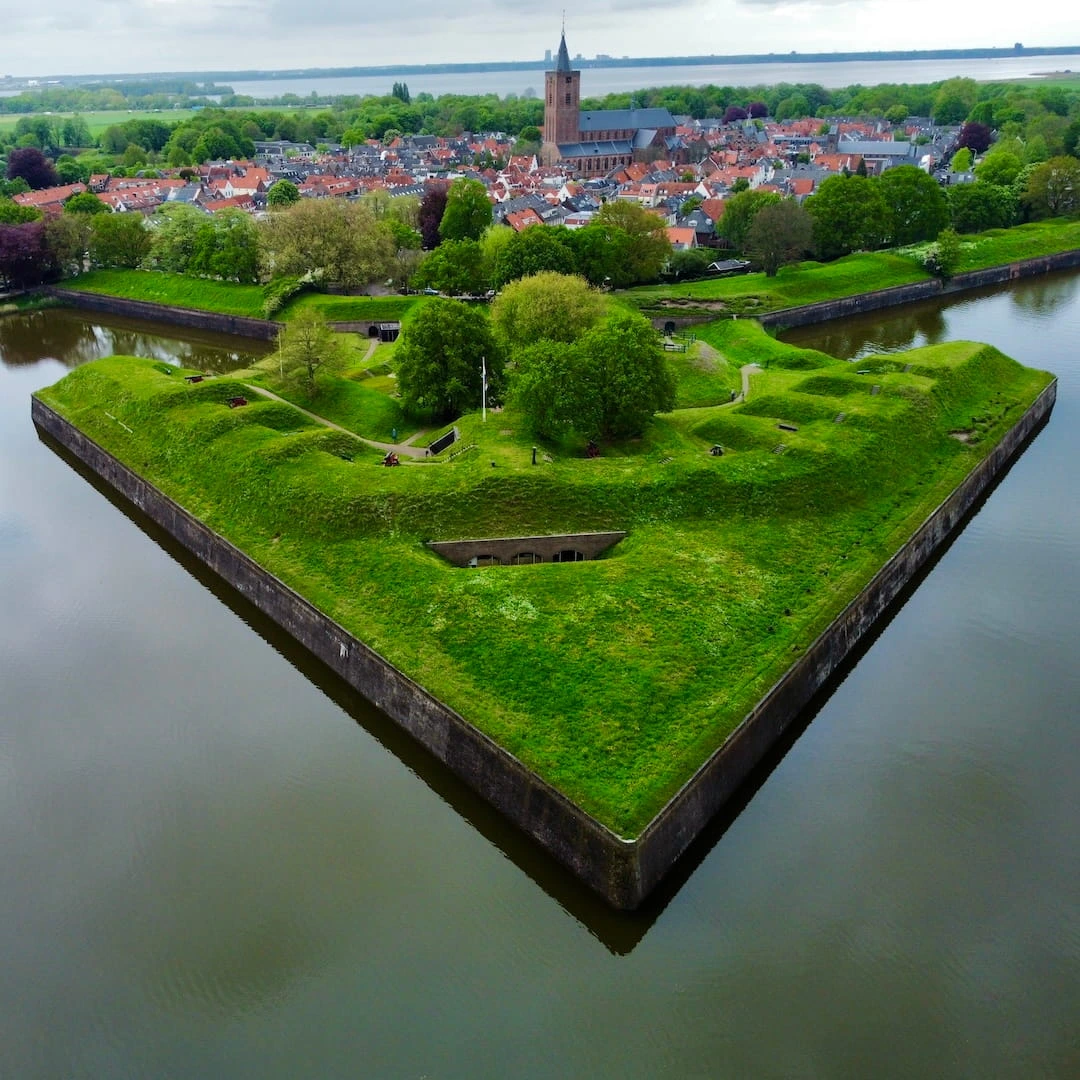
The Dutch Fortress Museum is located on Turfpoort Bastion in Naarden, one of the six bastions that give the fortified town its distinctive star shape. This historic site, dating from the 17th century, has largely been preserved in its original state. Here you can get a good idea of how Naarden once operated as a formidable fortress. Here you can get a good idea of how Naarden once operated as a formidable fortress.
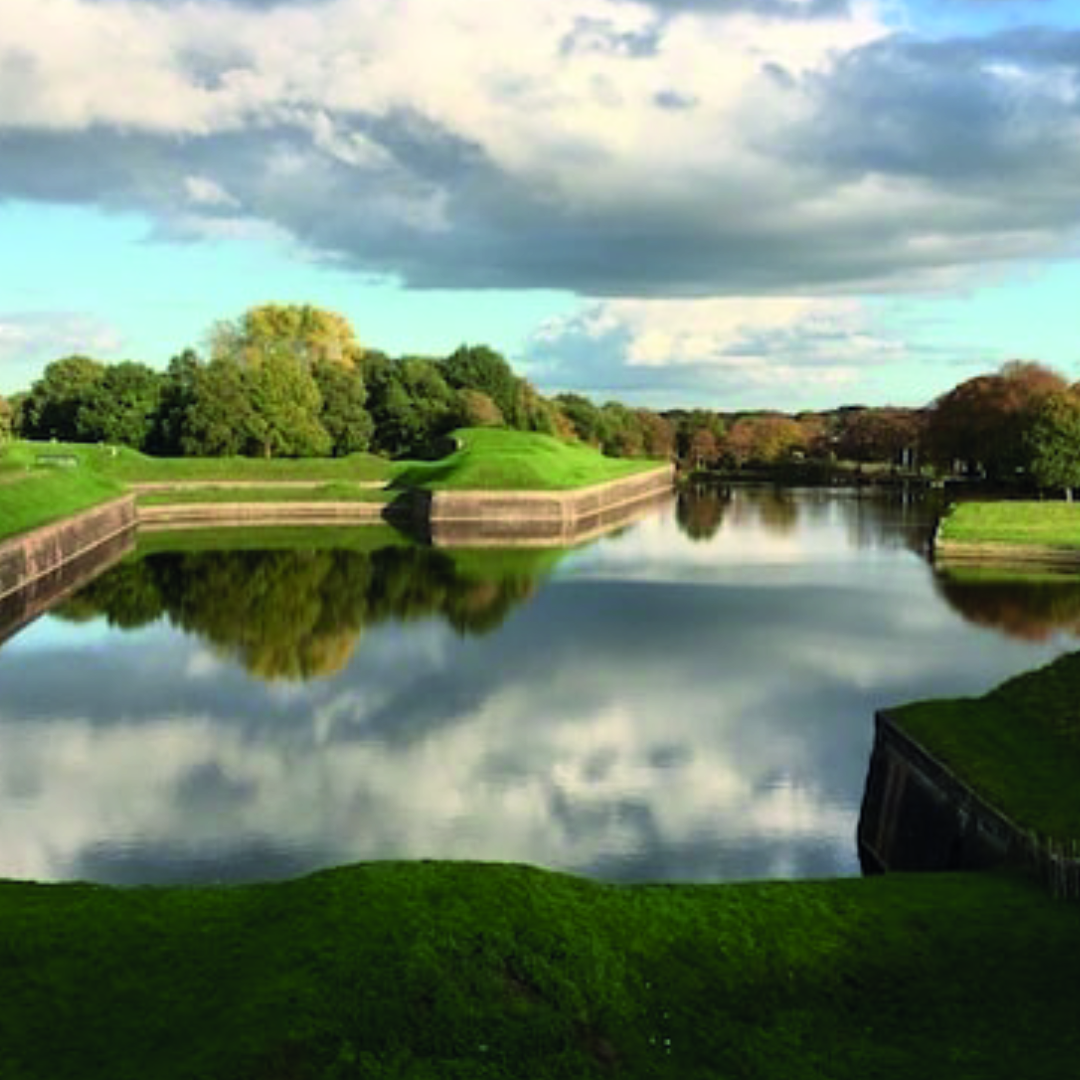
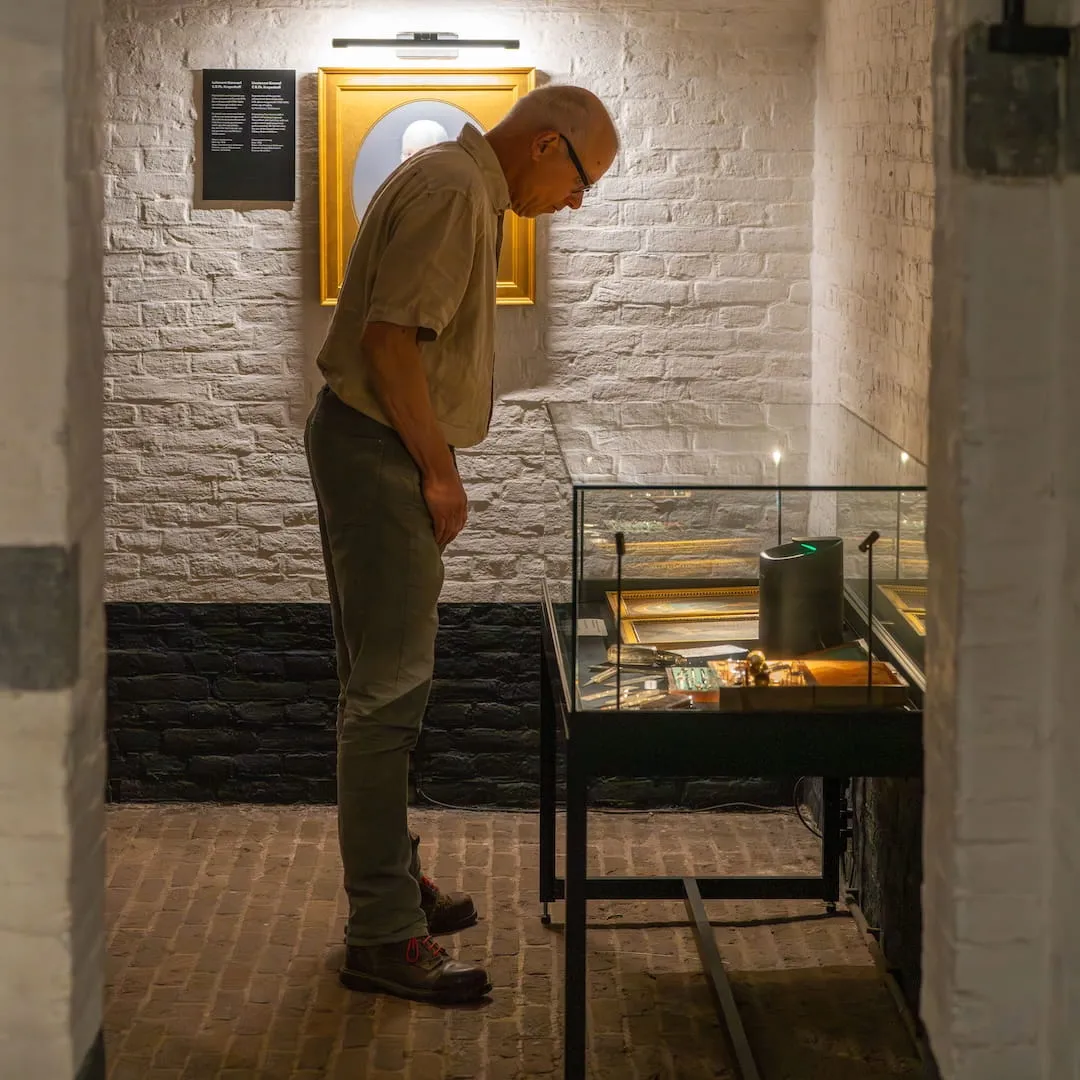
Outside, you are free to explore the green, park-like surroundings. From the bastion, you can enjoy a magnificent view of the fortifications and the moat. The museum's permanent and temporary exhibitions are housed in the old casemates beneath the bastion.
Turfpoort Bastion
The current form of Turfpoort Bastion dates from 1675–1685. During this period, the fortress was modernised on the orders of Stadtholder William III, in accordance with the New Dutch Fortress System. The bastion was enlarged and fitted with gun emplacements on two levels: the upper and lower flanks.
Behind the sides of the bastion are small gates, known as postern passages. These allowed soldiers to sail through the fortress moat to the ravelins, the small islands in the moat that played an important role in the defence.
Turfpoort Bastion
The current form of Turfpoort Bastion dates from 1675–1685. During this period, the fortress was modernised on the orders of Stadtholder William III, in accordance with the New Dutch Fortress System. The bastion was enlarged and fitted with gun emplacements on two levels: the upper and lower flanks.
Behind the sides of the bastion are small gates, known as postern passages. These allowed soldiers to sail through the fortress moat to the ravelins, the small islands in the moat that played an important role in the defence.
Casemates
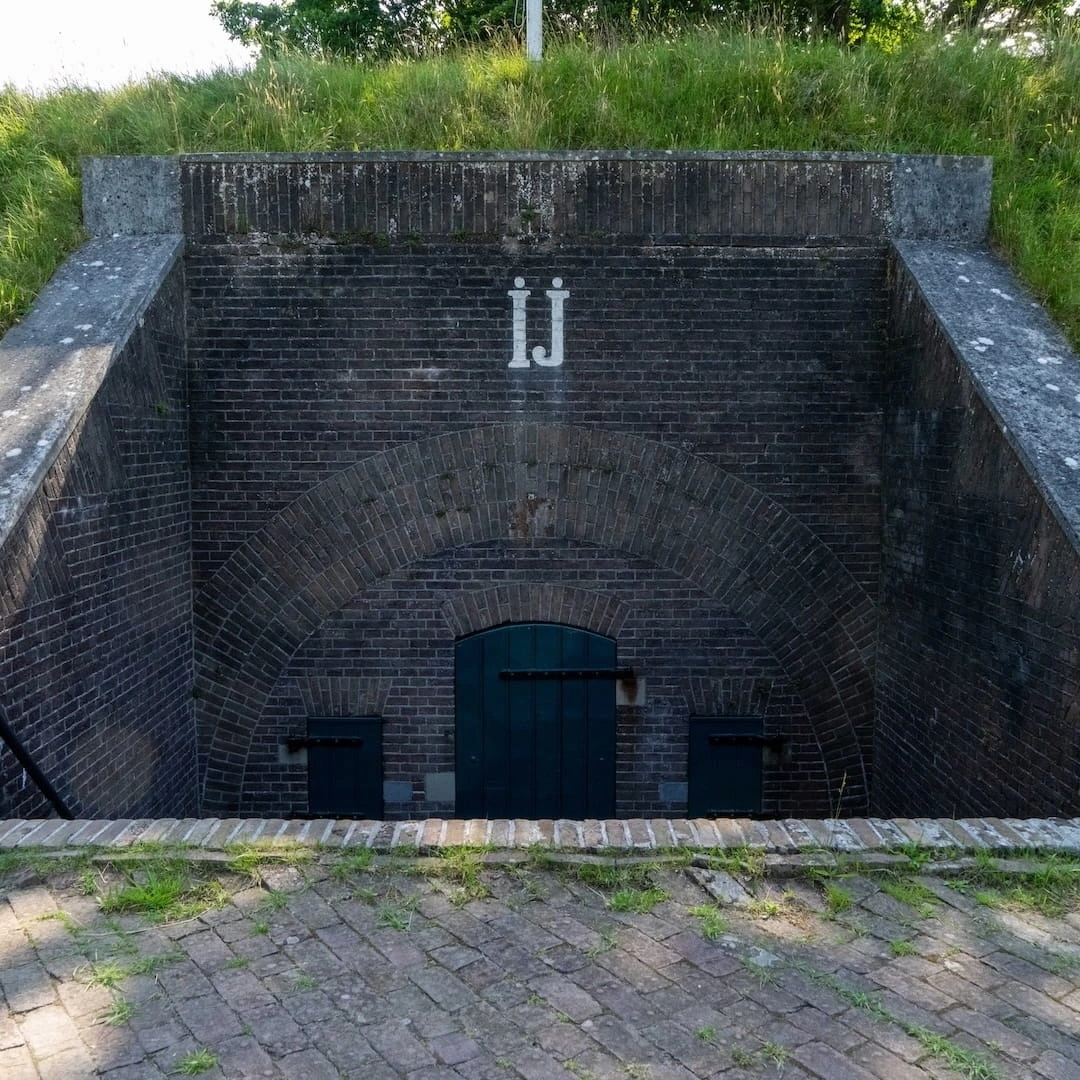
During the modernisation in 1685, casemates were built in the bastions. These are bomb-proof brick rooms covered with a thick layer of earth. In some places, the walls are almost two metres thick, with a layer of earth three to four metres deep above them. This meant the rooms were well protected from enemy fire.
At that time, artillery consisted of heavy iron cannonballs without explosives. The casemates housed the gun chambers. The enemy was fired upon from these spaces. The cannons were positioned so that their lines of fire crossed. This created a powerful defence system: deadly crossfire.
Powder Rooms
Lorem ipsum dolor sit amet, consectetur adipiscing elit. Integer nec odio. Praesent libero. Sed cursus ante dapibus diam. Sed nisi. Nulla quis sem at nibh elementum imperdiet. Duis sagittis ipsum. Praesent mauris. Fusce nec tellus sed augue semper porta. Mauris massa.
Powder Rooms
Lorem ipsum dolor sit amet, consectetur adipiscing elit. Integer nec odio. Praesent libero. Sed cursus ante dapibus diam. Sed nisi. Nulla quis sem at nibh elementum imperdiet. Duis sagittis ipsum. Praesent mauris. Fusce nec tellus sed augue semper porta. Mauris massa.
Plan your visit, buy a ticket
Tickets